 +91-9810222486
 contact@thebanyanworld.com

Learning to Play During Winter Months
At Banyan, we believe that learning doesn’t stop even when the temperature drops. Winter is a magical season for children, filled with unique opportunities to explore, create, and grow. While some might think cold weather limits outdoor fun, the winter months are actually perfect for encouraging curiosity, imagination, and physical activity in safe and exciting ways. Through thoughtfully planned play, we help children develop their motor skills, social abilities, and creativity—all while enjoying the cozy charm of winter.
As a play based preschool and daycare, we use winter activities for preschool children to turn every chilly day into a chance for early childhood learning.
Why Winter Play Matters for Young Children
Winter play is more than a way to pass the season. It helps children:
- Stay active and healthy when the weather keeps them indoors more
- Build skills such as balance, coordination, and focus
- Explore seasonal change through hands-on experience, a core idea in experiential learning preschool programs
- Release energy and manage big feelings
- Practise sharing, teamwork, and communication with friends
A good daycare with activities plans for winter, so children never miss out on movement, creativity, or fresh air.
1. Embracing Outdoor Adventures
Even in the winter months, stepping outside provides children with fresh air and natural experiences. At Banyan, we encourage outdoor play with activities that are both fun and educational:
- Nature Walks: Kids explore fallen leaves, twigs, and frosty grass, learning about seasonal changes and observing the world around them.
- Snow and Ice Play: Building snowmen, ice painting, or feeling the texture of snow teaches children about cause and effect while sparking curiosity.
- Physical Fun: Running, jumping, or simple winter games keep little bodies active, supporting gross motor development and overall health.
Outdoor adventures in winter allow children to build resilience, embrace new experiences, and appreciate the beauty of nature—even on chilly days.
2. Creative Indoor Play
When stepping outside isn’t an option, indoor spaces become a playground for imagination. Winter play indoors fosters creativity, problem-solving, and artistic skills. At Banyan, we introduce activities that keep children engaged and excited:
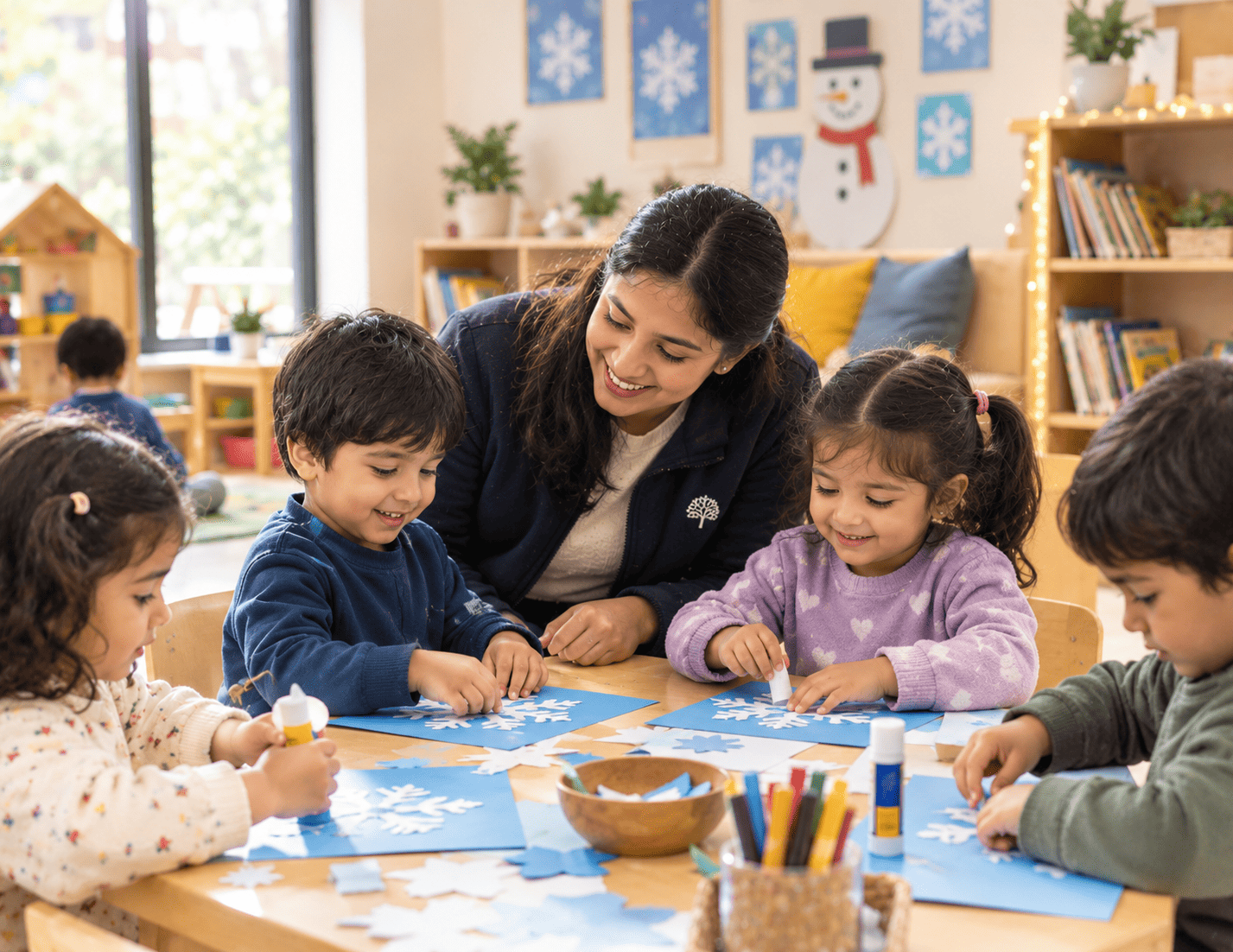
- Winter Crafts: Making paper snowflakes, creating cozy winter scenes, or crafting animals from recycled materials nurtures fine motor skills and artistic expression.
- Storytelling and Role Play: Children can act out winter stories, create puppets, or participate in themed drama sessions, enhancing language and social skills.
- STEM Experiments: Simple activities, like exploring how ice melts or building structures with blocks, encourage curiosity and logical thinking.
Indoor play is not just about passing time; it’s a rich learning environment where children can develop imagination, critical thinking, and emotional expression.
3. Learning Through Teamwork
Winter-themed group activities at Banyan teach children essential social skills while making play joyful and interactive:
- Collaborative Games: Board games or group puzzles teach children to take turns, strategize together, and develop patience.
- Team Projects: Working together to create winter murals, decorate classrooms, or build mini snow villages encourages cooperation and communication.
- Peer Support: Children learn empathy by helping friends dress warmly for outdoor activities or cheering each other on during games.
Through teamwork, children not only have fun but also develop lifelong skills of collaboration, empathy, and problem-solving. These shared moments are a big part of building social skills in preschool.
4. Sensory Exploration in Winter
Winter introduces children to a wide range of sensory experiences that enhance brain development and creativity. At Banyan, we design activities that stimulate the senses:
- Touch: Feeling the softness of scarves, the crunch of snow underfoot, or the smoothness of ice blocks.
- Sight: Observing winter landscapes, colorful leaves, or bright indoor decorations sharpens visual awareness.
- Sound and Smell: Listening to the crunch of leaves or the crackle of a winter fire, and smelling cinnamon or warm drinks, enriches sensory memory and emotional well-being.
These experiences help children understand the world in a multi-dimensional way, boosting curiosity and cognitive growth.
5. Physical and Cognitive Development
Winter play is not just about fun—it’s a vital part of a child’s growth. At Banyan, every activity is designed to enhance physical, cognitive, and emotional development:
- Gross Motor Skills: Running, jumping, or climbing outdoors strengthens muscles and coordination.
- Fine Motor Skills: Crafting, drawing, or ice play improves hand-eye coordination and precision.
- Problem-Solving: Winter-themed puzzles, building challenges, or interactive games stimulate logical thinking and creativity.
By combining physical movement with cognitive challenges, children remain active, healthy, and mentally sharp throughout the winter months. This supports cognitive development in preschool and emotional development in preschool at the same time.
What Each Winter Activity Teaches
| Winter activity | What children build |
|---|---|
| Nature walks | Observation, curiosity, awareness of seasons |
| Running and movement games | Gross motor skills, balance, stamina |
| Paper snowflakes and crafts | Fine motor skills, creativity, focus |
| Ice play and melting experiments | Cause and effect, early science thinking |
| Storytelling and role play | Language, imagination, empathy |
| Group puzzles and games | Patience, turn-taking, problem-solving |
| Sensory play with scarves, leaves, and textures | Sensory awareness and calm |
Winter Activities for Toddlers
Younger children enjoy winter play too, with simple, close-supervised activities. These preschool activities for toddlers and learning activities for toddlers work well:
- Leaf collecting and sorting by size and colour
- Scarf and cloth play, exploring soft textures and playing peekaboo
- Ice cube play in a tray with spoons and cups, with supervision
- Dancing and action songs to keep warm
- Cosy story time with picture books about the seasons
- Cardboard box play, such as a cosy “winter cave”
Staying Safe and Warm: Winter Play Tips
A safe daycare plans winter play with care. Good practice includes:
- Dress in layers that can be added or removed
- Cover heads, hands, and feet on cool mornings
- Keep children hydrated, even when it is cold
- Check the weather and air quality, and move play indoors when conditions are poor
- Supervise closely during outdoor and ice play
- Wash hands often, especially before meals and after outdoor play
- Stay home when unwell, to help prevent infections from spreading
What to Pack for Daycare in Winter
- A warm jacket or sweater that is easy to put on and take off
- Spare clothes and extra socks
- A cap or scarf if needed
- A water bottle
- Clearly labelled belongings
Simple Winter Play Ideas at Home
Parents can continue the learning at home:
- Make a “winter scene” with cotton, paper, and colours
- Build a blanket fort and read stories inside
- Go on a family nature walk and collect leaves
- Try an ice experiment: watch how ice melts in the sun or in warm water
- Dance to music to stay warm and active
- Cook or bake together, with safe child jobs like stirring or sprinkling
How to Choose a Daycare That Plans Play in Every Season
Look for a preschool and daycare that:
- Plans both outdoor and indoor activities all year round
- Keeps children safe, warm, and comfortable
- Offers play based learning rather than only worksheets
- Has caring educators who join in and encourage children
- Communicates clearly with parents about the day
- Treats play as an essential part of learning
Making Winter a Season of Joy and Learning
At Banyan, we see winter not as a barrier to play but as an opportunity to inspire curiosity, creativity, and growth in children. By blending outdoor adventures, indoor creativity, sensory exploration, teamwork, and skill-building activities, we ensure every child enjoys a fulfilling and exciting winter. Play during these months is more than fun—it’s an essential part of learning, building resilience, and making memories that last a lifetime. After all, every season at Banyan is a season for discovery.
Related reading
- The Hidden Learning That Happens During Play
- The Role of Creative Arts in Early Childhood Development
Frequently Asked Questions
1. Why is play important in winter?
Winter play keeps children active, healthy, and engaged when the weather limits time outdoors. It also supports creativity, social skills, and emotional well-being.
2. What are good winter activities for preschool children?
Nature walks, movement games, paper snowflake crafts, ice experiments, storytelling, group puzzles, and sensory play all work well.
3. What are good winter activities for toddlers?
Leaf collecting, scarf play, supervised ice cube play, action songs, and cosy story time are great options. Keep activities short and well supervised.
4. How can children stay active indoors in winter?
Dancing, obstacle courses, action songs, yoga-style movement, and group games keep children moving indoors.
5. What can children learn from winter play?
They build motor skills, creativity, problem-solving, language, teamwork, and an understanding of seasonal change.
6. How do I dress my child for winter play?
Use layers that can be added or removed, and cover head, hands, and feet in cooler weather. Choose clothes that are easy for children to manage themselves.
7. How do daycares keep children safe during winter?
Good daycares supervise closely, dress children in layers, check the weather and air quality, move play indoors when needed, and teach regular hand washing.
8. Should my child play outside in winter?
Fresh air and movement are good for children. Outdoor play works well in suitable weather with warm clothing, and indoor play is a good alternative on poor weather or poor air-quality days.
9. What is play based learning?
Play based learning is a way of teaching young children through exploration, imagination, and hands-on activities instead of memorisation.
10. What should I look for in a daycare for year-round play?
Look for a mix of outdoor and indoor activities, safe and warm spaces, caring educators, play based learning, and clear communication with parents.
 Call Us
 Email Us