 +91-9810222486
 contact@thebanyanworld.com

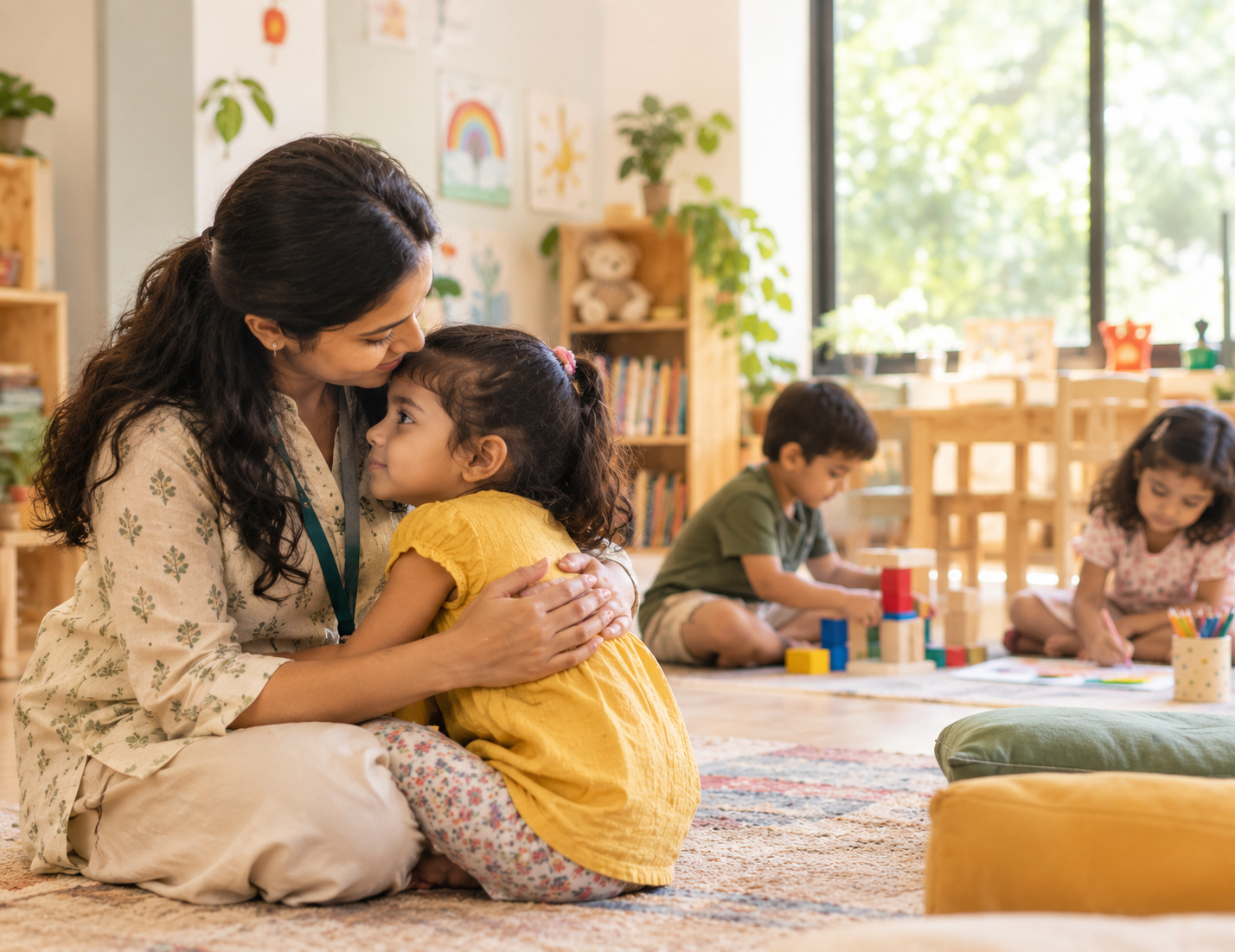
Not Every Cry Is a Tantrum: Understanding Children Beyond Behavior
The Emotional Side of Childhood We Often Miss
One of the most misunderstood parts of early childhood is emotional expression.
Children cry.
Sometimes because they are overwhelmed.
Sometimes because they are adjusting.
Sometimes because they simply do not yet know how to explain what they feel.
But in many situations, adults immediately label emotions as "tantrums."
Modern parenting conversations are now changing this perspective.
Experts and educators are encouraging parents to understand the reason behind emotions instead of focusing only on controlling reactions.
Emotions Are Communication
At Banyan, we believe emotions are communication.
Young children do not always have the vocabulary to say:
- "I feel anxious."
- "I feel left out."
- "I need comfort."
- "I feel overstimulated."
Instead, those feelings appear through tears, silence, clinginess, or frustration.
Tantrum or Meltdown? Understanding the Difference
Not every outburst is the same. Knowing the difference helps parents respond better.
| Tantrum | Emotional meltdown | |
|---|---|---|
| Trigger | Often tied to wanting something or hearing "no" | Often tied to feeling overwhelmed, tired, hungry, or overstimulated |
| What it looks like | Crying, shouting, and sometimes checking how adults react | Intense distress that the child struggles to control |
| What helps | Calm limits, clear boundaries, and patience | Comfort, a quiet space, and a calm presence |
In many cases, young children are not "misbehaving." They are still learning to manage big feelings, which is a normal part of emotional development in preschool.
What Your Child's Behavior May Be Telling You
| What you see | What it may mean | What can help |
|---|---|---|
| Crying at drop-off | Feeling unsure or missing home | A calm, warm goodbye and a steady routine |
| Clinginess | Needing reassurance and security | Extra time to settle and gentle comfort |
| Going quiet or withdrawing | Feeling overwhelmed or left out | Patient, low-pressure connection |
| Sudden frustration | Not having the words to explain | Naming the feeling and offering simple choices |
| Refusing to join in | Feeling anxious about something new | Allowing them to watch first, then join in |
Why the Way Adults Respond Matters
The way adults respond during those moments shapes emotional confidence.
Children who feel emotionally supported are more likely to:
- Calm themselves gradually
- Express emotions openly
- Build stronger trust
- Develop healthy communication habits
This does not mean children should never be guided.
It means guidance should come with understanding.
How to Respond When Your Child Is Upset
Try these steps next time big feelings show up:
- Stay calm yourself. Children borrow calm from the adults around them.
- Get down to their level. Eye contact and a soft voice help them feel safe.
- Name the feeling. "You look sad," or "That was really frustrating."
- Offer comfort first. A hug, a quiet corner, or simply sitting nearby can help.
- Wait until they are calm to talk. Explanations work better once feelings settle.
- Guide gently. Set limits kindly and offer simple choices.
- Reflect later. When the moment has passed, talk about what happened and what could help next time.
Daycare Separation Anxiety: A Normal Part of Growing Up
Many children cry when they first start preschool or daycare. Daycare separation anxiety is common, and it usually shows that a child is attached to their parents, not that something is wrong.
A few first day of daycare tips can help:
- Visit the centre together before the first day
- Keep goodbyes short, warm, and consistent
- Follow a steady routine at home
- Share your child's likes, routines, and worries with the educators
- Be patient. Most children settle in gradually with steady reassurance.
If you are wondering how to help a child adjust to daycare, the answer is often the same: predictability, patience, and plenty of emotional reassurance. At Banyan, programs like Cuddle Bugs are designed with exactly this first step away from home in mind.
Helping Children Build an Emotional Vocabulary
Children cannot talk about feelings they have no words for. You can help by:
- Naming feelings during everyday moments: "You look excited!"
- Reading picture books about emotions and discussing the characters
- Using simple feelings charts with faces
- Talking about your own feelings in a calm way: "I felt frustrated, so I took a deep breath."
- Playing pretend games where toy characters feel happy, sad, or scared
These habits build social skills in preschool too, because children who understand their own feelings find it easier to understand others.
How Preschool and Daycare Support Emotional Growth
Early childhood education is about far more than alphabets and numbers. In a caring setting, children practise emotional skills every day. Here is how daycare helps child development:
- Trusted relationships with patient, trained educators
- Predictable routines that help children feel secure
- Peer interaction that teaches sharing, turn-taking, and empathy
- Safe spaces where feelings are welcomed, not punished
- Play and storytelling that give children safe ways to express emotions
At Banyan, emotional care is part of daily learning. We focus on creating an environment where children feel safe enough to express themselves without fear.
How to Raise a Confident Child
Many parents ask how to build confidence in children. Emotional support is the foundation. A child who knows their feelings will be met with understanding is more willing to try new things, make mistakes, and try again.
- Praise effort, not only results
- Offer simple choices
- Let them solve small problems before stepping in
- Listen without rushing or dismissing their feelings
- Celebrate small steps, such as making a new friend
When to Seek Extra Support
Big feelings are a normal part of early childhood. But talk to your child's educators or paediatrician if you notice:
- Distress that is very intense, frequent, or lasting a long time
- A sudden change in sleep, eating, or behaviour
- A child who stays withdrawn or does not settle after a long adjustment period
Educators and doctors can work with you to understand what your child needs.
Because emotionally secure children eventually become emotionally resilient adults.
And sometimes, what a child needs most is not correction — but comfort.
Related reading
- School Ready vs Emotionally Ready: The Conversation Every Parent Is Having
- The Hidden Learning That Happens During Play
Frequently Asked Questions
1. Is my child having a tantrum or an emotional meltdown?
A tantrum is often tied to wanting something or hearing "no," while a meltdown usually comes from feeling overwhelmed, tired, or overstimulated. Responding with calm and comfort first helps in both cases.
2. Why does my young child cry so much?
Young children cry because they are overwhelmed, adjusting to change, or do not yet have the words to explain their feelings. Crying is communication, not misbehaviour.
3. How can I help my child express emotions?
Name feelings during daily moments, read picture books about emotions, and share your own feelings calmly. Over time, children learn the words to say how they feel.
4. What is daycare separation anxiety?
Daycare separation anxiety is a child's distress when apart from a parent at drop-off. It is a normal stage of development and usually eases with consistent routines and warm, brief goodbyes.
5. How can I help my child adjust to daycare?
Visit the centre together, keep goodbyes short and cheerful, follow a steady routine at home, and share your child's needs with educators. Most children settle in within a few weeks.
6. What are good first day of daycare tips?
Arrive on time, say goodbye warmly and briefly, send a familiar comfort item if allowed, and talk positively about the day ahead. Trust the educators to comfort your child.
7. Should I ignore a tantrum?
It depends on the situation. Stay calm, keep your child safe, and offer comfort once they are ready. Set limits kindly, and talk about what happened after feelings settle.
8. How does preschool support emotional development?
Preschool gives children daily practice in sharing, taking turns, naming feelings, and building trust with educators. Supportive routines and caring adults help them feel safe expressing emotions.
9. How do I build confidence in my child?
Praise effort, offer simple choices, let them try things independently, and listen to their feelings. Confidence grows when children feel understood and supported.
10. How do I choose a safe daycare for emotional wellbeing?
Look for warm, patient educators, a clean and secure space, a steady routine, and open communication with parents. Watching how staff respond to a child who is upset tells you a great deal.
 Call Us
 Email Us